
With Microsoft Corp. no longer supporting its Windows XP operating system, companies marketing tablet-based point-of-sale gear and software are hoping to garner more business from small and mid-sized businesses looking to replace POS systems that use the outmoded OS.
As expected, computing giant Microsoft ceased support for the 12-year-old XP on Tuesday, but merchants accounting for millions of points of sale are still running PCs equipped with the OS to handle functions from card transactions to loyalty programs to inventory management.
With Microsoft no longer supporting the software, users will no longer receive online updates, including so-called patches that fix security holes that could allow hackers to penetrate users’ systems. That makes XP more insecure, experts say, and also means users are no longer compliant with the Payment Card Industry data-security standard (PCI).
While exact numbers on how many merchants are using XP are hard to come by, the OS remains quite popular, especially with small and mid-size businesses. Some 73% of small merchants are running XP in some form, including for POS transactions or on servers, according to a recent survey by ControlScan Inc., an Alpharetta, Ga.-based security-services company. Ninety-two percent are aware that Microsoft ended support this week, but budget constraints and other considerations have kept many of them from switching out equipment, the survey says.
The new vulnerability of this existing gear also comes as merchants ranging from giant Target Corp. to smaller retailers are reporting data breaches that have exposed data on tens of millions of payment cards.
As more of these merchants begin looking to replace or shore up XP-based systems, a growing legion of tablet POS vendors hope to benefit. Many offer products based on the Apple Inc. iPad, which runs on Apple’s iOS operating system.
“We want people to switch,” says Jason Richelson, founder of New York City-based ShopKeep Inc. and himself a former merchant. “It’s a big deal. More than likely they’ll get a virus on their machine and won’t be able to rebuild the machine or re-install the software.” Six-year-old ShopKeep offers a cloud-based system that relies on the iPad and lets merchants run transactions, keep track of employee hours, manage inventory, and perform other business functions. ShopKeep accepts card transactions and also supports payment alternatives like PayPal and LevelUp.
“It’s going to take time, but yes, absolutely” the end of XP support will be a “catalyst” for tablet-based POS systems, Richelson tells Digital Transactions News.
In a recently released six-page white paper co-produced with ControlScan, Richelson advises merchants using XP that their choices are to upgrade to Windows 7 or 8, continue to use XP but switch to POS terminals for card transactions, or adopt a tablet linked to a cloud-based system. Tablets typically come from most vendors with card readers, receipt printers, and cash drawers.
The paper tells merchants they can easily tell whether their PCs are running XP by clicking on “Run” under the “Start” command in the task bar. They can then type “Winver” in the search box and click on “Enter” to bring up the version of Windows the machine is running.
ShopKeep just released version 2.0 of its system, featuring faster transaction times that Richelson says will make it easier for the product to penetrate new markets like full-service bars and restaurants. Most of the company’s current clients are small retailers and quick-service restaurants. The company will also release later this quarter a new product that will work with handheld devices like the iPod touch, Richeleson says, allowing retail personnel to serve customers anywhere in the store.
ShopKeep works with some 10,000 stores and is processing transactions amounting to $1.5 billion on an annual basis, Richelson says. The merchant count is up from 6,500 10 months ago.
Jason Richelson and his co-founder launched ShopKeep, a cloud-based point of sale company, from the back of their wine and grocery store back in 2008.
For the previous four years, Richelson had been using a traditional Windows-based point of sale system and was fed up with all the tech problems, including one particularly brutal experience where the servers crashed while he was on vacation, forcing his store to temporarily close.
He built ShopKeep to solve all the problems he faced with his old system. The company now offers small business owners a complete software and hardware product that gives them a wealth of data analytics as well as a way to track employees and scan credit cards with an iPad dongle, similar to what the mobile payments startup Square offers. Because all the software is cloud-based, users are safe from the potential havoc wrought by a single crashed server.
The company targets brick-and-mortar businesses of varying sizes whose owners are sick of using old, clunky systems that offer little to no customer service. ShopKeep not only lets users ring up sales, but track and manage their inventory, log customer information, and look for trends in sales data.
“ShopKeep helps you run a better business,” Richelson told Business Insider. “A lot of our customers try Square first. But, for them, it’s about collecting credit cards and doing payments. For us, it’s about what’s the next feature we can add to help our customers make more money.”
Richelson says that his company — which has currently has over 10,000 customers around the U.S. and has raised $12.2 million from investors like Tribeca Venture Partners and Canaan — helps small businesses in a more full-circle way than Square, the startup that Jack Dorsey founded that has more than $340 million in funding and multi-millions of users.
Going up against giants like Square and Groupon (which offers a point of sale app called Breadcrumb) with established names and big followings won’t be easy, but Richelson, who says that ShopKeep’s number of customers has tripled every year since launch, is in it for the long haul.
Smart marketers know that offline marketing techniques like in-store promotions, events, and free samples are powerful techniques for delighting customers and driving sales. The challenge? There’s limited data to prove it.
Meanwhile, the Internet has spoiled us. Thanks to tools like Google Analytics and KISSMetrics, we have more data than we can handle – we can track everything from lifetime value to user acquisition costs, and acquisition models.
We laugh at brick-and-mortar and call it “old school,” making absurd claims that online mega-conglomerates are making our favorite stores obsolete. The days of the shopping mall are dead, right?
Not so much. Brick and mortar isn’t going anywhere. Consumers will always be window shopping on their lunch breaks, grocery shopping after work, and trying on clothes at the mall.
The fact is that online and offline marketing aren’t separate channels. They’re interconnected parts of the same customer acquisition engine. Our Web browsing habits follow us to the store, and when we’re at the store, those preferences follow us home.
As research firm Millward Brown predicts, “the notion of marketing activity being online or offline or mobile will cease to be a meaningful debate in 2014.” Thanks to smartphones and tablets, there is absolutely zero reason for brick-and-mortar marketers to throw darts in the dark.
Mobile gives offline marketers the ability to quantify anything. Here are three ways that mobile can bridge data blind spots for brick and mortar storefronts.
1. What’s in your customers’ heads
Customers are a small business owner’s lifeblood. That’s why Oren Dobronsky, owner at Oren’s Hummus Shop in Palo Alto, would always ask his patrons for feedback.
He would rarely hear anything beyond the usual ‘awesome’ or ‘good’ – that is, until he checked his Yelp reviews and Facebook account, when a negative post would surface out of nowhere. That’s when Dobronsky teamed up with Adi Bittan to build OwnerListens, a messaging platform that helps business and consumers communicate in real time.
“The problem with current feedback methods is that they are slow, slunky, and ineffective,” explains Bittan. “No one wants to sit on a phone call or end up on an e-mail spam list.”
When it comes to customer satisfaction and retention, however, a split second can make all the difference. Business owners need to connect with their patrons at exactly the right time.
On the Internet, we rely on algorithms to make these moments possible. As Bittan explains, offline should not be any different.
“Customers are used to getting what they need at the touch of a button,” explains Bittan. “They leave a message on a friend’s page and get a comment in five minutes.”
Consumers can use the OwnerListens app to send a message to any business without having to deal with the time sink of looking for an email address or phone number. Businesses who sign up for OwnerListens will also receive a dedicated ‘smart’ SMS number that customers can easily text message.
2. Cross-platform connections
Real-time feedback, however, is only the first step. Storefronts that use OwnerListens will develop a log of all customer communication. The next step? Analyze the information you’ve collected, and incorporate your findings into your future business strategy.
“Over time, customer feedback data will help us better understand consumer patterns and expectations at the individual and geographic level,” says Bittan. “These insights about the quality of customer service can help us predict future business success.”
Just as online marketers optimize natural touch points through landing pages, social media, and 1:1 email exchanges, businesses need to make sure that they’re prioritizing the metrics that influence the business. This information can help connect customer behavior across online and offline marketing channels.
“The easiest example to think of is Facebook,” says Bittan. “If users have to login through Facebook to use your app and later go home and use Facebook, there is now a connection between their offline and online behavior.”
Business owners who aren’t collecting data are facing a major opportunity cost. Even when the data is readily available, businesses seldom think to capture it. This process requires upfront planning. Once the right systems are in place, however, business owners can focus on collecting the exact information that they need.
“As more consumers walk around with cell phones and especially smartphones, collecting data will continue to become cheaper and easier,” says Bittan. “A good way to think about it is that the mobile phone is to the physical world as is the browser cookie to the virtual world.”
3. On-the-fly profit maximization
Jason Richelson, founder and CEO at ShopKeep POS, is a small business owner turned tech entrepreneur who realized that data was the solution to better serving his customers.
“I built my wine business on emailing customers when we had new wine in stock that I thought they might like based on what they brought previously,” says Richelson.
The idea of 1) reaching the right customers, 2) with the right message, 3) at the right time is foundational to marketing online. Thanks to cloud-based technologies, marketing automation, and sophisticated real-time bidding (RTB) algorithms, marketers can send personalized messages to consumers at just the right moment.
Why should brick and mortar be any different?
“ShopKeep’s customers collect all their store data via their iPad register, which automatically populates in a BackOffice in the cloud,” says Richelson. “The POS is the data collection hub for a retail business, tracking everything from sales and products to customers and staff.”
Richelson elaborates that the cloud has infinite power in bridging data gaps for brick and mortar.
“The cloud eliminates data storage issues and makes analysis as easy as clicking a button,” he says. “That data is then available from anywhere using mobile devices.”
Brick and mortar storefront owners have access to their customers’ data in one central place.
“ShopKeep customers use that live data to make changes to staffing levels or sales strategies in real time,” says Richelson. “For example, store owners might notice a particular product selling well, and decide to run a promotion or position that product prominently in the store. Or they may notice Wednesday afternoons becoming increasingly, busy and decide to add more staff.”
Work backwards from your goals
If business owners aren’t careful, they’ll find themselves buried in a big data dump. The key to getting started with predictive analytics, real time feedback, and on-the-fly profit maximization is structure.
What matters most to your business and bottom line? What customer engagement metrics are most relevant to your business’s sales and revenue objectives?
Start with your goals, and reverse engineer the process. It doesn’t matter whether you’re marketing online and offline – you still need to wield your left and right-brained skillets. With the proper outlook and strategy, the technology and solutions will fall into place.
Wine may improve with age, but point of sale technology does not.
Years ago, when ShopKeep POS founder Jason Richelson operated the Green Grape wine store in Fort Greene, Brooklyn, he struggled so often with archaic point of sale systems that it motivated him to develop his own alternative.
Richelson had several problems with the store’s point of sale system. Because information was stored on the server, he had to be in the store to check reports. He also couldn’t get much support from the terminal manufacturers if problems arose.
“The final nail in the coffin was when I was on vacation and the server crashed in the store because there were viruses on the Windows machine,” Richelson says.
So in 2008, while still working at the wine shop with his partner, Richelson launched ShopKeep as a cloud-based system. When Apple unveiled its iPad in 2010, the tablet became “a catalyst for making innovative point of sale systems much more affordable for merchants especially small merchants,” Richelson says.
Before tablet-based systems, point of sale equipment was usually a Windows PC touch-screen which costs about $3,000, he says. IPads cost around $500, so ShopKeep quickly adopted the tablet as the basis for its own point of sale system.
The company of about 100 people started in co-working spaces in downtown Manhattan, and has since moved to its own office in Soho. ShopKeep recently opened an office in Belfast, Ireland and plans to target European merchants soon, Richelson says.
ShopKeep’s founder already had some experience in payments from co-founding Internet Cash in 1999. The company developed a system for consumers to buy online anonymously. Consumers would use a prepaid card with an Internet Cash-hosted payment page, rather than using their own credit cards.
ShopKeep charges merchants $50 a month per register. Merchants pay transaction fees directly to their processor. ShopKeep works with processors such as First Data, Heartland Payment Systems and Mercury Payment Systems. It also works with SCVNGR’s LevelUp, a mobile payment and loyalty system; and PayPal, which can process both PayPal and credit card payments.
PayPal has been a strong promoter of ShopKeep, mentioning the point of sale provider in much of its marketing and promotional material. ShopKeep also helped test PayPal’s mobile wallet in 2012 at a film festival in New York.
“PayPal is one of the partners that has helped us grow the business,” says Richelson. “It’s an innovative service and lots of our customers use it.”
Since its launch, ShopKeep has amassed more than 10,000 small independent retailer and quick-service restaurant customers. The company had seen a lot of adoption in Brooklyn, its home town. It has steadily updated its technology with features such as a customizable interface and QuickBooks integration.
All of ShopKeep’s customers come inbound, meaning they call the company looking for point of sale systems. The company also offers its Surround 360 software through independent sales organizations, though it is phasing this offering out to introduce a new program in the second quarter.
ShopKeep has seen steady growth, tripling its number of storefronts every year for the past three years, Richelson says.
“I truly believe in five years you’re not going to see any more PCs behind the counter instead you’ll see tablets in a lot of retail stores, mostly iPads,” says Richelson. This will be influenced also by Microsoft ending support for Windows XP in April, forcing merchants to seek a replacement to stay secure, he says.
Richelson’s prediction is confirmed by research from Mobey Forum, which states that mobile point of sale terminals will reach 46% market penetration by 2017.
The Green Grape still operates in Brooklyn, but Richelson sold his half to his partner two years ago to focus on ShopKeep. The store’s profits helped fund Richelson’s work for the first few years before ShopKeep got venture capitalist investment, he says. Green Grape still uses ShopKeep’s technology today.
“I have big aspirations to be the first software as a service company that comes out of New York with a billion dollar valuation,” says Richelson.
Pikanik Bakery’s multi-allergy mission
Bakers Journal
The next generation is growing up with a new baseline set of expectations about what the minimum standards of technology should be. Modern retailers have never known the excruciating anticipation of waiting for some incredibly basic report to load over a 56K bit connection. They are strangers to the hours of mind-numbing tedium spent surrounded by papers trying to get your books in order. There are a whole host of miserable experiences that the next generation of merchants will just never have to deal with. They too are entering the world of retail with a whole new set of expectations as to what the minimum standards should be.
That being said, here are five retail miseries that are now a thing of the past.
1. Man vs. Mother Nature
My disastrous old Windows POS system ran off a server kept in the basement. Prudence (and the insurance company) dictated that data from this server would backup at the end of each business day in case of fire or flood. This involved connecting a massive external hard-drive into the back of the computer and waiting whilst the data seemingly inched across the cable. It also involved carrying the hard-drive back home every day because, let’s face it, a backup is no use if it burns down in the same fire as the actual server.
How It Got Better: The cloud. With cloud-based servers data backup is automatic. Data is constantly synced and stored in the cloud, so Mother Nature can do her worst to the server, and crucial business data is always secure.
2. Man vs. Virus
Threat detected! Malware found! Critical vulnerabilities discovered! In the Land Before the iPad (LBtiP) the computer virus was a very real part of every retailer’s life. Thousands of dollars and hundreds of hours have been spent dealing with malfunctioning and infected PCs. And then, months were spent afterwards being a tyrant banning staff from using the computers to do anything other than ring up sales. Not exactly conducive to a fun working environment.
How It Got Better: The Mac and now the iPad have both proven themselves to be infinitely more robust in the face of hack attacks. So, now sales can be rung up in peace – and staff can play Angry Birds when things are quiet too.
3. Man vs. Data
The prohibitive expense of hardware meant most small businesses used only one machine for all the functions in the store. The same machine doubled as a POS unit and as a business computer to respond to email and run reports. In practice this meant running reports could only happen at the end of the business day. What’s more, even if there was an additional computer, someone still had to be physically located within the store and connected to the server to get access to the data. As a result, business decisions were often made on the fly and without consistent reference to real-time data.
How It Got Better: Cloud-based reporting has made it possible to access data anywhere. Something that was a complete headache previously is now as simple as opening an app and checking out real-time data on staffing, inventory, sales and more.
4. Man vs. Power
The power is out, you can’t take sales. The Internet is down, you can’t take sales. It’s a Tuesday, you can’t take sales. Considering the expense of the old Windows POS machines, they were often unreliable. After spending thousands of dollars on the machine itself, panic set in every time the power went out. And if the Internet went down for any reason, forget about taking any payments at all, hours were spent just trying to get someone on the phone.
How It Got Better: Mobile POS solutions rely on tablets that come with powerful, built-in batteries. Also, the top modern POS solutions allow for acceptance of payments even when Internet connectivity is down. The best part? The hardware to make this happen now costs about $500 instead of $5,000.
5. Man vs. Upgrade
I always thought that the great, cosmic joke of the old-fashioned POS system was that six months after you shelled out half of your life savings for some truck-sized Windows POS system, they would release hardware that was half the size and twice as fast – along with new software that contained lots of great new features. But it was too late to install that one, or you could but you’d have to pay for it all over again, including someone to install it. Then again to fix the viruses when it went wrong.
How It Got Better: The advent of the iPad has provided a touchscreen system that is getting better and better without raising the price point. What’s more, these updates get pushed out to the iPad from the App Store without ever having to do anything. The major POS providers now operate on a no-contract, monthly subscription model that means they are incentivized to constantly upgrade their service to remain competitive and retain their customers.
In short, there has never been a better time to be a retailer looking for technology.
Cash—and even checks—may have come back into vogue since the Target security mess, but the example being set by small businesses like San Francisco sandwich shop Split Bread shows that some owners are positioning their registers straight ahead—straight to cashless.
From the low cashier stands placed in the middle of the restaurant to the metal-plated QR codes affixed to each table, the design of the rotisserie sandwich shop was wholly inspired by the owners’ desire for a no-cash customer payment system.
“As we were designing the space, we realized that we were designing it around a cash till,” said David Silverglide, co-founder of the 20-employee operation. “We stepped back and said, ‘Why are we doing this when 70 percent to 80 percent of customer transactions at our other seven [restaurants] are made with credit cards?'”

A customer pays at a register with a smartphone application in a Auchan supermarket in Faches-Thumesnil near Lille, northern France.
The harm, following the recent data heists at Target and Neiman Marcus—where millions of consumers’ personal information was stolen—is now readily apparent. However, experts say that costs for merchants who process credit cards will skyrocket, and that may be a greater pain than cashless solutions mitigate.
It may be too little too late, but the world’s largest credit card companies have set a deadline of next year to switch from traditional magnetic swipe cards to EMV—computer chips embedded into credit cards, which can offer an extra layer of security depending on the way they’re used—for point-of-sales transactions. It’s a timeline that existed before the Target data breach but has taken on some urgency since: Target this week presented an expedited timeline for its own $100 million investment in EMV during a Senate hearing.
(Read more: The dysfunctional state of America’s credit cards)
For thousands of small businesses, that means paying hundreds to thousands of dollars to swap out old terminals for hardware and software that can handle the new credit cards. Given the way these cards are processed—consumers must pause to enter a pin after their card is read—it also means a slowdown in transaction time, which for quick-serve service businesses equals more money lost.
“For the small merchants, it’s not really fair—they’re asked to pay the cost to upgrade, but they’re not really at a huge risk, because of the [relatively small] amount of card information that they have,” said Jeff Shanahan, president of payment technology firm CardConnect. “They have to buy into the fact that this is for the greater good of the industry.”
Freeing itself from cash can help solve this retail cost/benefit imbalance. Investing in a cloud-based point-of-sales system allows Split Bread to more easily adapt to changes in the marketplace, like capturing sales from the increasing number of American consumers embracing tap-and-pay smartphone apps or complying with new security standards set by the credit card industry.
“We can scale as all these new technologies emerge,” said Silverglide. “Cash was the limiting factor.”
Building a better credit card trap
Split Bread is well ahead of many of the nation’s small businesses, just over half of which still only accept cash or checks. But as more small merchants make the investment to switch to cashless payments systems, Split Bread’s payment model—a blend of wireless and traditional payment processing—offers a more cost-effective way to navigate the waters of a historically complicated and expensive market.

Accepting credit cards has never been cheap or easy for small businesses. Besides the initial cash outlay of a few hundred dollars for hardware, merchants must pay a fee of 2 percent to 3 percent per card swipe, plus a laundry list of monthly and annual costs that banks, credit card companies and merchant service providers tack on.
“They send us the most complicated, hard-to-understand statement ever,” said Ben Van Leeuwen of Van Leeuwen Artisan Ice Cream, a 60-employee Brooklyn firm with six ice cream trucks and three retail locations. The company, founded in 2008, started accepting credit cards a year and a half ago. “I can’t really spend the hours and months trying to figure out what it means,” he said. According to the National Retail Federation, merchants pay about $30 billion each year for debit and credit card purchases, most of which goes to the banks issuing the cards.
Merchants who have invested in cloud-based point-of-sales systems that support swiping credit cards via smartphones or iPads are finding their way around some of the more exorbitant upgrade costs. “New hardware will be needed; that’s an undeniable truth about EMV,” said John Berkley, vice president of product at Mercury Payment Systems, a payment solutions company based in Durango, Colo. “If you have a piece of hardware that only accepts magstripes, the smaller it is to replace, the better,” he said. “When it’s a software system with a peripheral attached to it that can easily be swapped out, that’s an easier way to make [the upgrade] happen.”
(Read more: Time to put chips in U.S. cards: MasterCard)
The costs to switch to EMV will likely be lower for users of Intuit’s GoPayment and Square, wireless payment technologies featuring card readers and software that integrate with smartphones and tablets. Both companies already support chip card requirements in Canada (Square) and the U.K. (Intuit).
Fraud magnets
But even as these new technologies, like chip cards and wireless payment, promise a higher level of security with continually evolving encryption measures—for example, like many of its competitors, the GoPayment card reader encrypts credit card numbers and then decrypts them on Intuit’s servers so no personal data is ever captured in the software hosted on a merchant’s phone—fraudsters will likely find a way to hack into them.
“In other countries where they have required chip-and-pin in brick-and-mortar shops, the fraud risks have moved online,” said Jason Richelson, founder of ShopKeep POS, a purveyor of cloud-based point-of-sale software.
Or as Bob Sullivan, fraud expert and contributor to Credit.com, put it: “Here’s the thing about crime: It’s all a matter of odds. There’s no way to prevent it.”
Small merchants face a double-edged sword when it comes to fraud protection: They are less at risk than a major national chain like Target, but they also have a known tendency to spend less than their bigger counterparts to protect digital information, making them more susceptible to attacks.
The first defense against risks associated with wireless—things like malware targeted at mobile devices and the lack of time-tested fraud controls configured specifically for mobile—is education. “Most merchants don’t spend the time or effort to get educated, and that’s to their detriment,” said Steve Casco, founder and CEO of Cardnotpresent.com, an online publication that covers issues in the e-commerce and mobile payments industries. “We’re trying to bring our readers into the 20th century, let alone the 21st.”
The majority of small firms rely on their vendors for infrastructure security updates, and partnering with a well-known tech company can help ease client worries about security weaknesses with new technologies. “That’s one of the reasons why we wanted to go with a company like PayPal,” said Justin Joseph, a partner and CFO of EJ Blooms, a start-up floral design firm in Manhattan that only accepts plastic via PayPal Here to serve clients, including Viacom and the New York Historical Society. “Most people will have heard of it and know they can trust [the system].”
When Silverglide first deliberated on the decision to go straight to cashless, he asked himself, “What’s the harm of getting rid of cash already and see what it does for our operation?”
It did quite a bit. Despite the occasional customer grumbling about not being able to use cash, Split Bread has seen well over double-digit sales growth month over month since opening a year and a half ago. Silverglide attributes some of that growth to fostering an electronic payments–only business, which allows for quicker customer throughput—if they don’t want to stand in line and swipe their credit card to pay, customers can seat themselves at a table, scan the QR code with their smartphone and order without having to interact with staff—and less time and labor wasted with counting, watching over and depositing cash.
Cloud-based point of sale platform for retailers ShopKeep POS has teamed-up with popular accessory maker Griffin to launch the ShopKeep Mobile, a handheld point of sale device that makes it super-easy to accept credit card payments.
“This is a complete handheld POS that is connected to the cloud. It’s everything you need to run your store – in your pocket,” said Jason Richelson, Founder & CEO, ShopKeep POS. “It also removes one of the worst parts of the retail experience for shoppers, which is waiting in line; and creates a more personal customer interaction by removing the counter as a barrier.”
The thing about this accessory is that it’s designed for the iPod touch rather than iPhone, making sure retailers can use it without big upfront expenses. It rocks an encrypted credit card swiper as well as laser barcode scanner to “ring-up sales right from the showroom floor.”
The two companies are targeting an array of different stores for ShopKeep Mobile, ranging from clothing boutiques to specialty retailers, which can maximize revenue per square footage by removing their counter and providing customers with a better shopping experience.
As part of the deal, ShopKeep Mobile users get full suite of reports, inventory management and QuickBooks integration via the BackOffice, customer database, ability to send receipts via email, discounts by $ or %, rapid item search, ability to turn tax on or off, printer and offline mode support.
We kinda like how this sounds. The idea to end the shopping process right on the floor (rather than waiting in line to pay for goods) does promise an improved experience that ultimately leads to increase sales.
The ShopKeep Mobile is in production beta, and if you want to know more – you can register your interest from here.
ShopKeep POS, a provider of cloud-based business management software for the retail and restaurant industries, recently surveyed more than 640 small businesses around the U.S., with most respondents stating they were optimistic about 2014.
According to ShopKeep, 94 percent of respondents expect to increase revenue this year, and 60 percent are planning to either increase marketing efforts or expand their product lines.
Other highlights from the survey include:
- 29 percent of respondents plan to increase their marketing efforts next year, and many plan to invest in their own marketing assets over traditional advertising.
- 53 percent plan to invest in a combination of email marketing campaigns and social media to extend their marketing reach, and 54 percent plan to invest in a new website or e-commerce presence.
- 82 percent of respondents believe a combination of great customer service, personal relationships and supporting a local neighborhood store is what keeps customers coming through the door, and will be key to success in 2014.
- 42 percent of respondents are already using real-time business data to make changes to their store within 24-hours.
“We are seeing an overall shift in the way small business owners are approaching their strategies for the New Year,” Jason Richelson, founder and CEO, ShopKeep POS, said in a news release. “They are starting to think big and take advantage of data, social media and DIY marketing to stay competitive, much more so than we have seen before. Cloud technology has really leveled the playing field for these retailers, and they are bullish about their plans for 2014.”
Seattle bakery The Confectional is now able to better understand its customers and stock its stores after switching over to a mobile point-of-sale system.
The cheesecake shop implemented ShopKeep’s mPOS in May 2012 and has since been able to better stock its four locations based on consumer preferences and other data from the mobile system. For instance, The Confectional dropped its coconut cherry chocolate and cookies and mint flavors after sales were not great for those specific cakes.
“ShopKeep has helped us greatly with our wholesale accounts and keeping track of those,” said Destiny Sund, co-owner of The Confectional, Seattle.
“It allows us to keep track of each customer in the system so that we can see who is ordering and how much, and this holiday season it’s been completely off the hook,” she said. “So we can easily track our biggest wholesalers and catering companies and see exactly what they’re ordering and what flavors they’re ordering.
“Our wholesale business has increased 35 percent this year over last year. ShopKeep helps us track it.”
Confectional upgrade
Before implementing ShopKeep’s POS, The Confectional used standard traditional cash registers. This meant that they did all tracking and managing by hand.
For instance, if someone bought a specific cheesecake, the register only took note of a general cheesecake as opposed to the specific flavor. After installing ShopKeep, the bakery was able to track individual flavors to see how each one was selling.
At first The Confectional tested out the mPOS in one store, but soon after the owners decided to roll it out in all four locations.
One capability that The Confectional has incorporated is the ability to send its customers receipts via email.
The owners are also able to check in on their shops remotely to see how sales are going.
Be prepared
The mobile POS helps The Confectional’s owners better prepare for demand. Each cheesecake is handmade and take 24 hours to make, so the owners can now better stock their shelves based on purchasing history and data, saving themselves the time and effort that went into making cakes that never got purchased.
Additionally, ShopKeep keeps track of The Confectional’s beverages and notifies them when supplies are getting low, so they can make a new order from Coca Cola.
The Confectional is also able to leverage information from ShopKeep to analyze the busiest time of day in different locations to better manage inventory.
For instance, the bakery now knows that the Single Mini Cheesecake is the best-selling cake in all four locations and that their busiest hours are right after lunch through 4 p.m. The owners can also tell that more than 95 percent of customers take their beverages to go, so they can better prepare in terms of the cups they buy.
“We knew that we need to upgrade our systems because we opened two locations in one year alone, and those old registers weren’t doing the job, so we looked into Dinerware, we looked into Square, Quickbooks,” Ms. Sund said.
“I found some YouTube videos put out by ShopKeep in my Google search — I just kind of stumbled upon it,” she said. “I watched the video and went, ‘Woah this could definitely work for our business,’ and it looked so easy.
“I’m a great baker, but not necessarily a great technical implementer. It looked like something I could do.”
Final Take
Rebecca Borison is editorial assistant on Mobile Commerce Daily, New York
ShopKeep, a retail point-of-sale (POS) system designed by a small retailer for shop owners like himself that includes a cloud-based management service, has added several new features — including direct integration with the QuickBooks accounting application.
The new service, made possible through a partnership with Retail Intel, allows stores to import up-to-data store data automatically, which saves on journal entries. The cost of doing this will be based on how many store locations a retailers is managing.
Other new features include:
- Up to 3,000 customizable buttons on the register interface
- A faster new printing feature
- The ability to print tickets to multiple stations in quick-serve restaurants (like the kitchen and bar); conversely, retailers with small stores or spaces (like food trucks) can print both receipts and order tickets to the same printer
- Updates reporting
- A facility for making it simpler to handle merchandise returns
Not to freak everyone out, but there are six fewer days than usual between Thanksgiving and Christmas this year. For shoppers, that means a tighter timeframe in which to negotiate parking lots and mall lines. According to the Washington Post, retailers have started the full court press on marketing for their most important season earlier than usual.
It’s like that scene in Gravity where the space shrapnel starts hurtling toward Sandra Bullock and she’s all, “Oh no, oh nononono.”
To cope — and by popular demand from its customers — ShopKeep POS is releasing a new version of its iPad-based sales management system to cut checkout time in retail locations. Retailers can now customize their register with color coded buttons and group products to jump between different categories more easily.
ShopKeep has also focused on receipt and order printing, a pain point that adds friction to the sales transaction. High volume restaurants can now print orders to multiple locations, like the kitchen and bar, while smaller retailers can print receipts and tickets to the same printer. They’re pretty sensible updates to ShopKeep’s platform, making life easier for the independent retailers that make up the majority of its user base.
In the coming year, however, ShopKeep is looking to add larger scale businesses to that roster as they move toward cloud services. As with these latest features, customization is a key part of that push.
At this point, about half of ShopKeep’s customers are quick serve restaurants, like bakeries, coffee shops, and food trucks. The other 50% tend to be boutiques, clothing stores, and pop ups. They’re the type of retailers who wold be inclined to adopt payment systems like Square.
“Our main competitors are Windows-based POS systems. Depending on the sophistication of the merchant, there’s PayPal or Square, but then they realize they need reporting and timeclocks and employee management. When you’re running a store you need retail management, not just payment. They’ll try those first and then move up to us,” ShopKeep founder Jason Richelson said.
Acquiring larger clients is a function of making ShopKeep’s system easily customizable through its API.
ShopKeep will provide the basic tools for payments, employee management, general ledger, and supplier management, and the retailer can then hire integrators to do custom work on top of that API. Retailers are able to use any payment and accounting providers they want; ShopKeep connects clients to payments, rather than serving as the payments provider.
“In three to five years we can be in a really large percentage of retail stores, very similar to what Salesforce did with CRM,” Richelson said. “It’s a very different world now. POS used to be very fragmented because someone had to install a server in your basement. It’s no longer a fragmented industry. There’s going to be a dominant player.”
The Confectional, a small Seattle-based pastry operation that specializes in cheesecakes, used old-fashioned cash registers for the first few years of its existence. Its decision to expand into a commissary near the city’s famous Space Needle made it rethink that decision: the space was simply too small. What’s more, the management company at the site required a much more detailed accounting of point-of-sale receipts than the older technology could offer.
That’s when the company opted to invest in an Apple iPad point-of-sale (POS) solution developed by ShopKeep , which was founded by a small-business owner from Brooklyn who was fed up with his options. The Confectional’s co-owner Destiny Sund said the technology’s small form factor, detailed reporting capabilities (it can now tell which flavors do the best, seasonally or otherwise) and proactive customer service were all factors in her decision to choose this particular platform. ShopKeep actually didn’t show up very high on her Google searches; she was convinced after watching a video tutorial that the company published on YouTube.
“They made us feel so comfortable in our initial calls, that I knew we would feel comfortable getting up and running,” Sund said.
The fact that the technology worked with the company’s existing credit-card processor, Gravity Payments, was another factor in ShopKeep’s favor. Another big plus was the system’s integrated time clock, which saves time in calculating payroll, and a mobile application that allows Sund and other managers to monitor all the locations (including the kiosks at the Space Needle, as well as its original location in the city’s Pike Place Market).
The technology, which has been in place about a year, has helped The Confectional change up its product mix for specific locations. For example, customers tend to buy smaller, individual four-packs of cakes in the newer location, while the original location at Pike Place tends to sell larger items. It has also helped keep track of when things sell, for staffing and production purposes.
“I am far more tuned into the business,” Sund said.
As American consumers begin to embrace tap-and-pay smartphone apps, relegating plastic to a deep recess in the pocketbook or wallet, more than half of U.S. small business owners continue to live in the past—forget mobile apps, they don’t take American Express, or anything other than cash.
For nearly 10 years Joe Coffee, a small chain of artisan coffee shops in New York City, accepted only cash. Not only was it a more profitable scheme—Joe’s average sale was $2.75 and credit card processing would eat up about 3 percent of each transaction plus add a laundry list of fees—but being cash-only was part of the company’s ethos.
“We thought of ourselves as the little mom and pop place with the owner behind the counter making coffee. Our signs were hand-drawn, our small coffee was $1.63, we’d only take cash—all those things went together,” said Jonathan Rubinstein, Joe’s owner.
Six years in, Rubinstein began to notice a shift in customer behavior. “We started reading our Yelp reviews—75 percent of the negative comments about Joe were about us not taking credit cards,” he said. “We were losing a lot of sales in terms of people not having cash and going to a competing coffee shop but also people spending less money who wouldn’t buy a $17 bag of coffee [beans] or a $75 grinder.”
Joe started accepting credit cards at its new outpost in 2011, a shop near Columbia University, where customers—mostly students—tend to pay with debit cards. The experiment went well enough that as of mid-October, nine in 10 Joe Coffee locations now take plastic. “Welcome to 1999,” the company tweeted on Oct. 23. “All of our stores (other than GCT) now take CREDIT CARDS! Our Yelp ratings about to skyrocket #sorryittookustenyears,” it said, referring to Grand Central Terminal.
Time to wake up, smell coffee
If cash has an added cost for the consumer reaching into the hundreds of billions annually—as one recent study found—the jury is still out on the lost sales opportunity among cash-only merchants. Sales from new customers may sustain the offsetting of expenses incurred by card processing fees. Joe Coffee is betting that by rejecting its cash-only ethos it’s in line for a snowballing sales channel in an age where cash is no longer king. According to a report by Javelin Strategy & Research, 27 percent of all in-person point-of-sale purchases were made with cash in 2011, while payments made with plastic cards—debit and credit—comprised 66 percent, and that is expected to rise.
“It’s the way of the future,” said Rubinstein. “Even though I was the one who came to this kicking and screaming for eight years.”
Rubinstein’s initial reluctance mirrors that of a broad swath of U.S. merchants. Fifty-five percent of the nation’s 27 million small businesses don’t accept credit cards, according to Intuit, the Silicon Valley software firm that develops financial and tax prep solutions for small companies. By not accepting cards, those 15 million businesses are missing out on $100 billion in sales annually—roughly $7,000 per company a year in either new sales or sales that go to competitors that do accept cards, said Intuit.
“I don’t understand the small businesses that don’t take cards,” said Jason Richelson, a former grocery and wine store owner in Brooklyn who founded ShopKeep POS, a purveyor of cloud-based point-of-sale software, in 2008. “In my opinion, as a grocery and a wine store owner, if you don’t take credit cards, you suffer—you could be increasing your sales 20 percent and you’re going to make your customers happier.”
Richelson points to another positive of accepting cards: Customers spend more money with them. Across ShopKeep’s merchants—more than 7,000 brick and mortar shops around the U.S.—the average spend per transaction is 120 percent higher when customers pay with credit card compared to cash.
The merchants of menace, and margin
Given the benefits of plastic, why don’t they take Amex? For many small business owners, it’s about solving a two-part math problem: Are profit margins big enough to absorb the cost of the credit card fees? And if they aren’t, would the new business that’s brought in via credit cards make up the difference?
For companies like Peters’ Bakery in San Jose, Calif., whose best-selling products are 70-cent donuts and $2.65 slices of burnt almond cake, the answer is no: “I get more business than I really need right now,” said owner Chuck Peters, who’d rather not take the chance of losing any of his loyal customers by raising prices.
Some well-established companies aren’t seeing a customer demand for plastic. “We try to stay old school as much as possible because we have a formula that’s worked—our restaurant has been here in the same spot since the 1950s,” said Kellie Cobern, co-owner of the Peculiar Drive In, a burger and pork tenderloin institution in Peculiar, Mo.
With an average lunch ticket price of $7, the drive-in doesn’t have many customers turning away because they can’t pay with credit or debit cards. “We keep our prices as low as possible to try and help out our community,” said Cobern, adding that handwriting tickets, honoring regulars and accepting only cash and checks add to the appeal of her company’s culture. Business is up 30 percent since she and her husband took it over from his mother last year. “If we were to accept credit cards, we would have to raise prices across the board to cover those fees,” Cobern said.
Calculating the fees isn’t easy. According to Jeff Shanahan, president of payment technology firm CardConnect, there are roughly 700 interchange levels that credit card companies use to determine what they charge when a card is swiped. The fees generally run 2 to 3 percent per swipe, but there are additional costs that banks, credit card companies and merchant service providers—the folks who are liaisons between the merchants and the banks—tack on.
“Besides the fee on every card swipe—it’s different depending on the type of card being used—there is a yearly fee just to use the [card processing] company,” said the owner of a small yarn shop 25 miles outside of San Francisco. “Then you can either buy or rent the credit card machine, there are access fees based on how many charges you have per company, and there’s a license fee that is only a small amount per month, but it adds up. They give you free paper for the machine but you pay for postage, which is more than the cost of buying paper at Costco.”
According to the National Retail Federation, merchants pay about $30 billion each year for debit and credit card purchases, most of which goes to the banks issuing the cards. “It always relates back to the fees,” said Shanahan. “You have to give up about 3 percent. If your margins are 4 to 5 percent, that’s a pretty large portion of your profits.”
The cost of remaining cash-only
Despite these costs, “as everyone becomes a lot more familiar with doing things on their phones, if the next store over offering the same set of products accepts electronic payments, then you’ll be losing business,” said Bhaskar Chakravorti, senior associate dean for international business and finance at Tufts’ Fletcher School and co-author of a recent study, “The Cost of Cash in the United States.”
New payment technologies like Square, Intuit’s GoPayment and PayPal Here—card readers and software that integrate with smartphones and tablets—make the switch to accepting electronic payments easier by eliminating most of the fees. Merchants pay one of two rates, either a per-swipe fee (2.75 percent for Square) or a monthly fee ($275 for Square). Joe Coffee’s Rubinstein says he saves 30 percent by using Square over the traditional credit card system he started with. To offset Square’s fees, he said, “we have to make 1 percent more [in sales].” So far, at the shops where credit card processing is new, “the last three weeks have been among the best weeks [in terms of sales] in history.”
Until a significant percentage of their customers demand to pay via mobile or credit cards, an acceptable substitute for many small companies is proximity to an ATM. For customers who arrive without cash, the staff at the Peculiar Drive In will start cooking their orders while they cross the street to take out money.
Scott Alderman, owner and captain of tour boat company Rusty Anchor in Mount Dora, Fla., will allow his customers without cash to take one of his two-hour tours and hit the ATM a few blocks away after the boat ride if time is tight. “I haven’t lost more than one or two customers a year because I don’t accept cards,” said Alderman, whose pontoon rides, located 20 miles northwest of Orlando, attract tourists looking for day trips.
Some companies just aren’t interested messing with the familiar flow of their cash-only system. For the one remaining cash-only Joe Coffee store in Grand Central Terminal, Rubinstein isn’t yet looking to add credit card readers.
“It’s our fastest shop—we do about 250 transactions an hour there and we have it down to a science,” he said. “Most customer are regulars; they’re holding their $2.25 in their right hand and loyalty punch cards in their left. If we try credit cards in there and it adds four seconds to the transaction, it will dramatically change our sales.” And not for the better, he said.
NEW YORK (TheStreet) – More and more small retailers are turning their Apple (AAPL – Get Report) iPads into cash registers through cloud-based software, which in turn is feeding into higher store sales.
According to the latest data from ShopKeep’s Small Business Insights Center, bricks-and-mortar businesses that use the company’s point-of-sale (POS) software, experienced 20% growth in same-store sales in the third quarter over the same quarter in 2012. Transaction numbers were up 13.6% year over year.
ShopKeep POS provides cloud-based point-of-sale software for retail shops and restaurants. The software allows retailers to set up registers in just a few minutes with the ability to accept cash or credit cards with their choice of processor, view real-time sales from their phone or Web browser and track inventory and staff.
The results are based on data from 556 customers that were using the ShopKeep software during both time periods.
As owners become more comfortable with cloud-based business management software, sales are benefiting. Mobile software allows for quicker and easier transactions for both customers and salespeople. Shop owners, through the use of data analytics, can better predict sales trends and make adjustments to inventory, for example.
Mobile payment companies, including Square and Intuit’s (INTU) GoPayment are also helping businesses accept credit card transactions quicker through card readers that attach to a mobile device. Last year, Square partnered with Starbucks (SBUX) to bring its services to 7,000 of the coffee chain’s locations.
ShopKeep says its customers are also typically younger, tech-savvy business owners.
“Our customers are typically new stores; a younger demographic and early adopters of technology,” says ShopKeep Founder and CEO Jason Richelson. “They are not afraid to try new things and embrace change, and you can see that reflected in their business performance. Retail technology is evolving incredibly quickly and those stores that are evolving with it are clearly seeing great results.”
The data also indicates a more positive outlook for fall retail sales and into the all-important holiday season, Richelson notes.
However, Richelson states small retailers “need to be smart about the promotions and products they push in order to make the most of the shorter retail holiday season this year.”
Large retailers for the most part have been slow to adapt mobile technology as part of their operations, but a few forward-thinking companies like Starbucks, Apple, Urban Outfitters(URBN) and Home Depot (HD) were early adopters of mobile payments technology.
More and more retailers are getting on board with technology. Traditional department stores such as J.C. Penney (JCP) and Nordstrom (JWN) have joined the ranks to equip sales employees with devices to shorten the checkout time. Retailers are also realizing further benefits such as “increased savings, sales and customer satisfaction,” according to an August 2013 article by Mobile Payments Today, citing a report by Yankee Group Technology Roadmap.
The survey data also highlighted markets including Portland, Chicago and Seattle emerging as rapid adopters of cloud-based POS. The three cities had the top sales growth percentages by city over 2012, while more established markets like Los Angeles and New York City experienced the highest overall sales by city, but lower growth rates, according to ShopKeep.
Brooklyn, N.Y., in particular, a city that had large early adoption rates of mobile POS systems, saw higher total revenues than Manhattan and Los Angeles, the data found.
By industry, quick-service restaurants had the highest overall sales via mobile technology, with mobile food trucks having the highest revenue increase during the third quarter.
Originally published on pointofsale.com.
ShopKeep POS, a cloud based iPad point of sale solution, today announced the hiring of two executives: Drew Schwartz as Vice President of Product Management and David Herzog as Director of Business Development for the Channel Business.
I spoke with Jason Richelson, Co-Founder and CEO of ShopKeep POS yesterday about the growth of his company. ShopKeep now boasts over 8,000 active users, up from 3,000 one year ago, an impressive growth rate. The company has 81 employees, Richelson told me, and is actively acquiring customers all over the United States and is beginning to get traction in Canada as well, although it supports only one tax rate in the system at the present time. The system is sold directly to end-users, also through the VAR (value added reseller) channel, and credit card processing vendors can make referrals as well.
I asked first what factors Richelson felt contributed to the success of the product; “having been a merchant” he replied, he could offer business owners a system that was totally engineered around their needs. Prior to starting ShopKeep, Richelson and a partner owned wine and grocery stores and other businesses that ran on server based POS systems. There he experienced numerous frustrations with that form of technology, which led him to design a system that could solve the problems he’d experienced. Development on the system began in 2008.
ShopKeep raised $2.2 million in 2011 from a group of NY venture capitalists, and another 10 million dolllars from Canaan Partners in New York City in 2012.
Richelson said that the company was planning to expand in a number of niches (vertical markets). He cited Hospitality as one of those segments, including full service restaurants and bars. There are fewer (cloud based iPad POS) players in those niches he felt, and it offers significant opportunities. Any segment where people “pay for something and then leave”, is a potential niche. ShopKeep claims to be the first cloud based iPad POS system, and mentioned a YouTube video of him demonstrating the system back in 2011.
There’s no question that this is an emerging year for cloud based iPad POS systems. As this niche begins to mature it shows all the signs of a platform gaining widespread acceptance among early mainstream buyers. Contributing to the growing sales of iPad systems, and something that poses a threat to traditional POS systems is the low cost of entry. When equipped with a cash drawer and receipt printer, iPad based POS systems are right around $1,000 per station to get up and running – about a third the cost of an average PC based system. When we compare the cost of a multi-user system which includes a server, then iPad based POS is even more cost effective.
Adding support to the concept that point of sale can be run on an iPad is the presence of a major company, NCR, who has its own solution known as NCR Silver.
For those buyers who want the leading edge, but not the bleeding edge of technology, all these factors maybe giving them the security they need to get in the water with iPad cloud based POS.

ShopKeep offers merchants a package that includes an APG cash drawer, Star Micronics receipt printer, credit card reader and iPad stand (choice of colors) for just $699. The company has other hardware bundles for Quick Service restaurants that includes a kitchen printer, and also a Retail bundle with bar code reader and printer. (click on the image for more info).
More about ShopKeep:
The system will work with any credit card processor according to Richelson, and cites that as being important to merchants – they are never locked into any one processor.
The monthly fee for a single user system is just $49 and that includes 7 day a week technical support, and product upgrades.
The system was recently in use at the Telluride Film Festival ; all payments at the festival in Colorado this year ran on ShopKeep, iPads and the cloud. 100 volunteer cashiers rang up 12,000 sales in four days, with 30 mins of training.
There is the capability for users to import and export their data.
A merchant can use his iPhone or Android phone to view sales data in real time no matter how many stores he has.
I asked Richelson about competition, and the fact that there were “low barriers to entry” for this industry, in that apps are relatively easy to create. His response was that any potential buyer should try calling the customer care desk of the POS provider they are considering and see how quickly their calls and issues get handled. ShopKeep is a service company he stressed, and that sets them apart.
In the world of next-gen point-of-sale (POS) systems, Square might have the brand name and billionaire founder, but ShopKeep is making moves of its own. And the company’s chief executive, Jason Richelson, says that while Square dominates the dongle-touting mobile food truck crowd, there are as many, or more, small, brick-and-mortar businesses using the Shopkeep’s tablet point-of-sale system than its widely known competitor’s.
Shopkeep grew out of Richelson’s need as a small business owner. Five years ago, he owned a high-end grocery store, and an accompanying wine shop in Brooklyn, serving the borough’s growing professional class. The store was a success, but the back office was a mess, he says, and he wanted to create a better way. So, in 2009, Richelson hired a developer and began to build his own POS system. Two years and an iPad later, the app started selling in Apple’s AppStore.
Street Fight recently caught up with Richelson to discuss the impact of the cloud behind the counter, how the existing model is inefficient by design, and the challenge Square might have in moving upstream.
When cloud computing enters a market, it often has a disastrous impact on the incumbent players. Are there aspects of the POS market that will make it exceptionally difficult for a legacy companies to adapt?
Micros, which dominates the market today, has come out with [a cloud computing product] recently but they’re not cloud. They still think cloud is putting a server in a data center, but it’s not the same. Cloud is running everyone in on the same servers and the same platform.
But the big problem is the sales structure. They rely on this value-added reseller network of people who are used to selling a whole bunch of equipment, and then they make all the money from the installation. That’s part of the reason I assume they haven’t gone to the cloud. The cloud has destroyed so many different industries, which were out there selling equipment — sales force is a primary disruptor — mainly because there’s so much less equipment to install so it’s much cheaper.
So traditionally there was an incentive for the POS companies to create products which were inefficient by design?
Yes. The legacy companies had to build the software in such a way so that the independent consultants, who set up the software, could make enough extra money charging to install the systems. They had to build these inefficiencies so that these small guys made just enough money to survive but then they can’t afford to support their customers and their customers don’t want to pay a monthly service fee to have support.
So, we’re saving the retailer on the installation cost, configuration and all that stuff. And then if you go straight to the cloud model they don’t have to buy a server. They don’t have to have a database. They don’t have to have a system. They don’t have to have tech people really at all. So we’re removing all of that. However, that said, we still work through the channel — but the channel is changing and will need to change .
Okay, so if a big part of the model is eliminating the installation costs and you still plan to sell through channels, how do you make it valuable for the resellers?
The reality is that a value-added reseller is not going to make enough money on ShopKeep, so we’re trying to educate them to think of all the other products they can sell on top of it. You’re not going to be able to make all your money selling ShopKeep, so you need to bundle it with all these other products that you could offer the small retailer — loyalty, payments, etc. Essentially, we want [the sales organization] to become value-added reseller of cloud products across the board. You make enough money off of all of them, but alone on ShopKeep you’re not going to make the money because of our software.
More and more local companies are bagging their push for small businesses and heading to wealthier pastures upstream. When you think about the cloud POS business, how easy of a step is it from small to medium to large businesses.
There are two million small brick-and-mortar retailers out there, and we’re firmly focused on those with our current product. As we build our platform though and give people access through an API, we’re going to have to expand from just single locations. A lot of our customers are growing, and they want to see sales across all three locations and that’s where we’re going to be able to start giving them that ability, whether it’s through us or through a third party who wants to roll up your sales.
That’s how I see us moving into middle-market retailers. We won’t be in Walmarts or any large, large retailers — but I definitely see us moving more into enterprise over the next year with a platform. But currently right now the actual product here is with the registers. It’s for small retailers and eventually restaurants and eventually deeper into retail — clothing stores, shoe stores and specialty retailers.
During the summer, Square moved into the brick-and-mortar market with the launch of Square Register. Where does Shopkeep stand in relation to them today?
We obviously haven’t raised the kind of money which Square and others have put together — but I’ll bet we have more brick-and-mortar installs than Square. It’s hard to say, but I don’t think they have as many actual stores. Now granted, they have millions of mobile people using the dongle, but businesses actually open seven days a week with employees and overhead, I would bet that we have at least the same if not more customers.
We’ve been out there longer and that’s all we focus on. We don’t do mobile. We don’t do flea markets. We don’t do anything like that. But it’s also because we’re 100% merchant-focused and we’re just trying to help merchants. We’re not trying to do anything else like come out with wallets or do anything like that.
ShopKeep CEO: I’ll Bet We Have More Brick-and-Mortar Installs Than Square
StreetFight
Stellar POS system in the cloud
The Green Sheet
Todd Masonis and Cameron Ring didn’t set out to start a chocolate company.
When the pair met at Stanford University in 1997, they created Plaxo, a social contact service that ended up selling to Comcast in 2008.
At the time, Facebook and Google were also rumored to be bidding for Plaxo. But Comcast ultimately won with an offer estimated between $150 and $170 million.
Shortly after the company sold, Ring and Masonis decided to try to reinvent chocolate.
They wanted to create a place where people could see and learn about how chocolate is made, Ring tells Business Insider.
So they started Dandelion Chocolates in San Francisco late last year.
There are a few different facets to the Dandelion Chocolates business. There’s the factory where it produces its own chocolates, as well as a cafe where it serves up candy bars, hot chocolate, and pastries.
Some days, Dandelion even hosts classes to teach people the basics about chocolate. It’s appropriately called “Chocolate 101.”
Earlier this year, it had about 50 wholesale retailers on board. Today, that number has more than doubled to 120 retailers. There’s even a waiting list of about 100 wholesalers that want to carry the chocolate, but there’s just not enough to go around right now.
On the cafe side of the business, things are going well, Ring says. There are months when Dandelion brings in more money than they spend. But they’re still looking to further scale the direct-to-consumer side of the business.
Masonis and Ring set up the store using an iPad and cloud-based point-of-sale system from ShopKeep. Ring even created a custom back-end solution to sync up every aspect of the business.
“It’s hard to come from a technology company and not apply tech in every way that you can,” Ring says. “Once you’ve done tech, it kind of always affects how you see the world.”
Dandelion Chocolates prides itself on its high-quality chocolates. All of their chocolates are 70% ground cacao beans and 30% sugar. That’s it.
Dandelion will typically make three types of bars at any given time. Even though they use the same ingredients in every bar, they have completely different flavors, Ring says. Some cacao beans are sweeter, more nutty, acidic, and so on. Depending on what beans they have at any given time, Dandelion can achieve a variety of flavor profiles.
Down the road, Ring says he’s looking to open up a parklet, which would be a little permanent pedestrian area installed in a parking space outside the shop. The company is also looking for another retail opportunity, Ring says.
Dandelion Chocolates is mostly self-funded, but also raised a small friends and family round.
Payment processor Global Payments Inc. and iPad point-of-sale (POS) provider ShopKeep POS announced a partnership on July 11 that would make ShopKeep POS products available to Global Payments’ U.S. merchants, a press release said.
“This relationship with Global Payments continues to build upon our promise to merchants to partner with the best service providers in the industry,” said Todd Lasher, vice president of ShopKeep POS, said in a statement.
For many years, established small businesses have managed to get by with emphasizing cash or paper checks as their preferred method of completing transactions. But that strategy will become increasingly difficult to support over the next 10 to 20 years, as the purchasing power of the millennial generation grows.
That’s because more than half of that generation (52 percent) almost never use checks as a payment method, according to some newly released data from WePay, a payments service provider founded in 2008 that aims to make it simpler for small businesses to accept credit card payments on mobile devices.
Approximately 64 percent of consumers of all ages write fewer than three checks per month now, preferring to handle financial transactions digitally or in other ways. That’s up substantially from 35 percent just three years ago.
What’s more, almost 70 percent of the consumers aged 18 to 34 will only shop at businesses that offer multiple payment methods, according to the WePay research.
These trends are in sharp contrast to what small businesses are doing: 72 percent of the owners surveyed by WePay prefer to accept cash or credit cards. So, there’s an obvious disconnect.
The data was gathered by WePay as part of a survey of 1,000 small-business owners and 2,000 consumers conducted by Ipsos and Harris Interactive.
Separate data released this week by one of the leading tablet point-of-sale (POS) technology solution providers, ShopKeep POS, also supports the notion that small-business owners can benefit from introducing digital payment options.
Same-store sales for small retailers and restaurants using the ShopKeep POS platform were up 17.4 percent year over year, based on an analysis completed in May 2013. One company, Sweethaus Cupcakes and Candy in Charlottesville, Va., recorded an astonishing 416 percent increase during that period.
Noted one of the store’s owners, Tara Koenig: “I started out selling cupcakes but now I have multiple streams to my business. I do deliveries, I visit public events with my cupcake trailer, I do weddings and have started selling candy and novelties. The nice thing about ShopKeep is that I can split each of these areas up in my BackOffice and keep regular track on how each area is doing.”
Is it time for your business to rethink it’s POS strategy? If so, you might want to check out the Death to the Cash Register promotion currently being run by PayPal.
Profits at a Charlottesville cupcake shop are up 400 percent with the help of an iPad program.
Sweet Haus is a paperless business thanks to ShopKeep POS – or point of sale. The 2-year-old business has used the program since it opened.
Owner Tara Koenig says it allows her to analyze sales and make business decisions quickly, so she can focus on making and marketing her cupcakes.
“I check general sales reporting at least a couple times a day but then I’m able to check things like product mix, how certain departments of our business are doing,” said Koenig. “So it lets me analyze how things are going and make business decisions very quickly, change things up if they’re not working or if I see that something is working, refocus more money or attention on that category.”
Koenig says she chose the program based on its low start-up cost – just the cost of the iPad and $50 a month for the program.
To learn more about ShopKeep POS, click here.
Fox Business News
NRF: Cloud-based Mobile Point of Sale from ShopKeep POS
Retail Customer Experience
Upstart Business Journal
Three years ago, NY announced it’s first ever class of “Venture Fellows” – a program that brings entrepreneurs from around the world to learn from a who’s who of NYC Mentors.
This week, they announced the third class of Venture Fellows, and it’s an awesome group.
The program begins on February 25th with a series of events, including an opening reception, meetings with leading New York City companies, workshops, panel discussions, and cultural events. “In its two years of existence, NYC Venture Fellows has taken an innovative approach towards nurturing the next generation of entrepreneurial talent in our City,” said Seth Pinsky, the NYCEDC President. “By providing emerging entrepreneurs with the mentorship needed for their businesses to take critical steps forward.” The plan is to continue to seed NYC with the best and brightest entrepreneurs.
I’m proud that I was able to participate in the nomination process, and a number of the entrepreneurs chosen were folks I was able to nominate.
The 2013 class of NYC Venture Fellows class is awesome! Here’s the list – Amit Avner, Co-founder & CEO of Taykey; Edward Barrow, CEO & Founder of idio; Piraye Beim, Founder & CEO of Celmatix Inc; Constantin Bjerke, Founder & CEO of Crane.tv; Adam Braun, Founder & CEO of Pencils of Promise; Rameet Chawla, Founder & Lead Information Architect of Fueled; Carter Cleveland, Founder & CEO of Artsy; Reese Fernandez, President & Founding Partner of Rags2Riches; Jason Freedman, Founder & CEO of 42Floors; Jeremy Friedman, Founder & CEO of Schoology; Ari Goldberg, CEO of StyleCaster; Pep Gomez, CEO & Founder of Fever; Vipin Goyal, CEO & Co-founder of SideTour; Urs Haeusler, CEO of DealMarket; Sachin Kamdar, CEO of Parse.ly; Riggs Kubiak, Founder & CEO of Honest Buildings; Lily Liu, Founder & CEO of PublicStuff; Meghan Messenger, Co-founder & Chief of Staff of Next Jump; Jason Richelson, Founder & CEO of ShopKeep POS; Elias Roman, CEO of Songza; Benzi Ronen, Founder & CEO of Farmigo; Rachel Schechtman, Founder of STORY; Mei Shibata, Co-founder of ThinkEco; Zach Sims, Co-founder & CEO of Codecademy; Shane Snow, Co-founder of Contently; David Steinberger, CEO of comiXology; Alex Torrenegra, Co-founder of VoiceBunny; Alexis Tryon, Founder & CEO of Artsicle; Eben Upton, Executive Director of Raspberry Pi; and K Young, CEO of Mortar Data.
Congratulations to this year’s class of remarkable fellows!
The Innovate NYC Schools Challenge
If you’ve got a great idea for technological innovation in education – New York’s ED department is issuing a cool challenge. The nation’s first district-sponsored software challenge will be focused on closing the gap in middle school math outcomes and enhancing classroom interaction and management. The goal is to develop a new model for creating technology-driven solutions to some of the most pressing challenges identified by NYC educators.
Developers from around the world are invited to submit applications, solution-oriented games and programs to enhance the classroom experience through teaching, learning and engagement. These submissions will be reviewed by a panel of iZone educators and nationally recognized experts from a variety of areas, including user experience design, leading media publications, venture capital firms and the education sector. Winners of the challenge will receive over $100,000 in cash and prizes, and participants become eligible for consideration for a pilot program in iZone schools.
You can find out more about the challenge, and how to enter here. Like so many of these cool NY tech challenges, this is being powered by Challenge Post.
Events this week: (via Garry’s Guide)
Monday, Feb 04 6:00pm Free
The Impact of Digital on Movie Going: Jon Gibs SVP Research NBC Universal
AppNexus, 28 W 23rd St
AppNexus President Michael Rubenstein will host a fireside chat with Jon Gibs (SVP Research, NBC Universal).
Wednesday, Feb 06 8:00am
Business Insider Presents: Social Commerce Summit
Pier 60, 23rd Street and 11th Ave
Rockstar list of speakers including John Caplan (OpenSky), Ben Fischman (Rue La La), Chris Fralic (First Round Capital), Michelle Lam (True&Co), Doug Mack (One Kings Lane), Chris Bolte (WalmartLabs) and others.
Thursday, Feb 07 6:00pm Free
AppNexus: A Peek Into the World of Digital Art: Lauren Cornell New Museum
AppNexus, 28 W 23rd St
A fireside chat with the New Museum’s Karen Wong & Lauren Cornell
That’s it for this week. Send nice thoughts to your favorite groundhog – as spring is now just around the corner.
Tips, events, or N.Y. Tech news? Email me at Srosenbaum (at) nycedc (dot) com.
Q: What are the advantages of switching my POS system to the iPad?
A: There has been a lot of discussion among brick-and-mortar merchants over the advantages of switching from the traditional in-store point-of-sale system to a cloud-based version that can be run from an iPad or other tablet or mobile device. For help weighing the benefits, we spoke with Jason Richelson, founder of New York-based ShopKeep POS, a cloud-based system. Naturally he’s a huge proponent of the approach. Here, he outlines his top three justifications for converting to the cloud and details the costs and logistics involved.
Give us your elevator pitch. What are the key benefits of cloud-based POS?
First there’s data access. The best cloud-based services have iPhone apps with live sales data at your fingertips, and all of them run web-based reporting that lets you manage your store’s POS from anywhere. Next are instant upgrades. Your cloud-based POS provider keeps you on top of new technologies and of security requirements you’ll need to implement over the next few years. Finally, I’d say easy integration. Loyalty programs, gift cards, payments and rewards all seamlessly integrate into cloud platforms. Not so for many Windows-based POS setups.
OK, but when does it become worth it to chuck my old system?
Most businesses have a change of heart when they experience a virus on their Windows-based POS system. The cost to reinstall Windows, their POS and drivers is just too much, so they look for options. Also, in two years time, it is anticipated that Visa, MasterCard and American Express will take responsibility for the cost of goods bought with stolen cards, but only for merchants that use the newest technology for card acceptance–so you’re going to want to upgrade soon, anyway. That technology is already included in today’s cloud-based POS, since technology upgrades are part of the software-as-a-service (SaaS) model.
How does the cost of cloud-based POS compare to that of traditional systems?
Traditional POS systems typically charge you a software license fee per register and then a yearly maintenance fee of 18 to 20 percent for upgrades. And it’s rare for support and training to be included in this price. The problem with this model is that if you’re unhappy with your purchase after, say, a month, you’re out the full cost upfront.
SaaS is more of a partnership model in that you pay a monthly fee only and nothing upfront. If you don’t like what you got, you can cancel at any time. These monthly fees cover software, support, backups and future upgrades. There shouldn’t be any surprise charges in the future.
How hard is it to migrate to a cloud-based POS system?
Migrating from any POS to another can be difficult, but the best way to convert is to export your entire inventory and customer information to a spreadsheet and then send it to your provider. Any good cloud POS company will import those items into your new account for you as part of setting up your account, so you can be up and running quickly. And they shouldn’t charge you extra for it.
Originally published on www.crn.com.
Money In The Bank
Tech startups are once again pounding the pavement for backers with deep pockets and for some — particularly in the cloud, networking, storage, analytics and mobility segments — there have been some handsome paydays in recent weeks.
Every month here on CRN, we’ll track some tech company funding rounds from the past six weeks worthy of industry attention. Here’s a look at the latest notable infusions — and the companies that drove them.
______________
CipherCloud
Originally published on http://allthingsd.com.
New York-based ShopKeep POS has raised $10 million to continue the development of its application that allows merchants to manage inventory, track customers and conduct transactions from an iPad. The second round of funding was led by Canaan Partners, with Tribeca Venture Partners and TTV Capital also participating. The company is already serving 3,000 merchants and is working with several partners, including LevelUp, Dwolla and PayPal. It has raised $12.2 million to date.
ShopKeep POS, a New York-based startup that builds a point-of-sales app for the iPad, has raised $10 million in its second round of funding.
The comparison to Square is easy to make, given that both plug credit card readers into an iPad. But the differences start to show up as businesses require more capabilities, like keeping close track of employee activity, said ShopKeep POS CEO Jason Richelson.
ShopKeep POS does handle some credit card processing, and takes a percentage off each swipe like other companies. But it also lets merchants use existing merchant accounts with financial institutions like Bank of America.
The company now has around 3,000 merchants running ShopKeep POS. There are early signs of larger chains converting their legacy point-of-sales systems to ShopKeep POS, with the service being deployed in newer stores once open, he said.
The company will use its new funding to staff up with additional engineers.
We caught up with Richelson to find out more about the new round and how it’s going to be used. Here’s an edited transcript of the interview:
WSJ: Can you tell us a little bit about ShopKeep?
Jason Richelson: We’re the east coast Square. Well, only kind of joking, Square’s obviously in San Francisco and we actually have a sales force out here. But once you open a store and start scaling up, Square doesn’t have the functionality that a real store needs. A lot of stores might start that way, and a lot of guys graduate to ShopKeep. Square educated the market, that’s great, but we offer more for the more sophisticated businesses as they scale up.
WSJ: What do you mean graduate?
JR: I mean we have, forward pointing, image-line management, multiple tenders, that kind of stuff. We do kitchen purchases –you can place an order to the registers and it’ll print a receipt to the kitchen. We do employee tracking, full time-clock functionality, and some really detailed reporting. If you look at Brooklyn, you know the Greene Grape, I started that business and my first creation was a point-of-sales system that prompted me to start ShopKeep. Basically I know what retailers need to run their shops. Square is doing a good job but they’re coming from both sides, we’re only merchant focused. We’re 110% focused on that.
WSJ: How big is ShopKeep?
JR: We have over 3,000 retail stores across the country using ShopKeep, and we have 37 employees. Our customers are probably minimum $200,000 to $300,000 in sales. They are doing 50, 100, 500 swipes a day and they’re real retailers.
WSJ: Does ShopKeep do credit card processing too?
JR: We’re fully integrated — you swipe a credit card through ShopKeep. You can use your credit card merchant account with ShopKeep too. Some of these retailers have an amazing deal with credit card processing with Bank of America or Chase, and they want to keep doing that, so we can route the transactions to their merchant account. When you sign up, you get asked if you want to use us as a processor, and the average volume determines the swipe fee. It’s gonna be really clear what you’re paying. If your average ticket is high it’s gonna be around 2%, if it’s low it’ll be 3-5%. If you want to use PayPal with ShopKeep you can get that same rate. When they come to us, if they get a merchant account with us, there’s no cancellation fee and it’s simple pricing.
WSJ: How are you attracting bigger retailers?
JR: It’s very hard to convince any retailer that already has a computer-based point of sales system. We’re doing a great job signing up all the new stores out there. What’s happening is these stores with multiple locations, when they open the next location they’re switching to ShopKeep. It’s still new, but it’s getting there, and we’re gonna do some things next year to help transition some of those larger retailers onto ShopKeep. Our focus is on enterprise, but it’s the small single-location retailer and new multi-location store service now.
WSJ: So that’s what the funding is for?
JR: The funding is for engineering. We just hired a director of talent acquisition to find and bring in new engineers. ShopKeep is an iOS-based application with a Rails back-end, we do a lot of JavaScript and we do payments. Those are all the things that really excite engineers. When you think of an engineer joining Etsy, an Etsy is just an online app. With ShopKeep you can touch iOS, you can touch rails, you can get into hardware interfaces, it’s an exciting place to work.
WSJ: What’s your personal background?
JR: Before the Greene Grape, I worked at a trading firm on a market trading desk for three years. Before that I was at an Internet startup called Internet Cash, it was a stored value shopping cart for shopping on the Internet. An alternative payment method. Then the Greene Grape. I have a lot of experience in retail, and I was at PriceWaterhouse before the Internet crash. I have a background that doesn’t work well for a lot of people so that’s why I started ShopKeep and Greene Grape.
BetaKit covered the launch of New York City-based ShopKeep’s iPhone application earlier in September, which gave merchants real-time access to their sales data from the company’s iPad point-of-sale (POS) system. Today the company announced the addition of a new time clock feature to enable merchants to save time by streamlining traditional payroll systems in hopes of better managing their employees. Since launching its iPad POS system in August 2011, the company now works with close to 4,000 Canadian and U.S. brick-and-mortar retailers to help them manage transactions and sales data via mobile devices.
“ShopKeep’s goal is to be more than a POS system, we want to help small retailers run their entire business, not just ring up sales. This was definitely something customers were asking for. We had all the tools in place, it was very easy to snap this on, and all of a sudden we’re saving them probably hours a month in time tracking,” ShopKeep CEO Jason Richelson said in an interview. “Because keeping track of hours for hourly employees is a huge amount of work, we’ve just made it so simple for them with the iPad they already have in their store.”
The new time clock solution lets merchants enter their employee information into ShopKeep’s POS system, with the ability to export the information for payroll purposes. Another pain point it helps merchants avoid is that it allows for easy adjustment whenever an employee may forget to punch in or out of their shift, in addition to being able to correlate sales data to measure employee performance.
“A big problem that I had in my grocery store was adjusting the time clock punches, because so many times people forget to clock out or they forget to clock in, and that was always such a pain in every other system to adjust that so that I could get my export file. We’ve made it so easy with a JavaScript widget to adjust very quickly or add a punch or adjust a punch, and then export into a file format that can be imported into your payroll system, that’s really where the time-saving comes in for managers.” Richelson added.
The new feature is available on the latest ShopKeep POS iPad app. The company also announced last month that it would be integrating mobile payment providers LevelUp and Dwolla, which recently announced its MassPay service, as part of its overarching strategy to consolidate apps and devices into its POS solution. The new features and mobile payment integration the company announced last month will help it to gain traction among its target market of small merchants, and stay ahead of competitors like Square Register, Square’s mobile POS system, and other mobile POS systems including restaurant-focused Breadcrumb, which was acquired by Groupon in May 2012, and Revel, another iPad POS system which is more focused on larger grocery chains and verticals within the industry.
The company’s engineering team will continue to focus on adding features for the company’s customers, with a new upcoming application announcement for the restaurant industry coming next week. With a focus on being a consolidated and all-in-one ecosystem that lets merchants do everything from processing sales, to tracking inventory, and now managing their employees, the company will look to be the iPad POS system of choice for small brick and mortar stores. With a lot of competition from big players like Square, the company will need to scale as quickly as it can in order to be one of the major players in the mobile POS space.
If you think doing business on the web begins and ends with online banking and e-commerce, you haven’t been paying attention. Today’s innovators are tackling all manner of chores—including those facing brick-and-mortar operations and tasks that traditionally required expensive software or experts.
Some new business services come from established financial technology players such as Yodlee; others hail from tiny startups. These apps can potentially help your SMB raise money, keep the books, find customers and investors, or simply ring up sales and get paid. Here are half a dozen that caught our attention at the Finovate Fall showcase in New York earlier this month.
Yodlee launches biz app suite

Yodlee is best known for its consumer online banking software, which is white-labeled by dozens of institutions, and it makes other finance apps. It recently unveiled the Yodlee SmallBusiness Suite, which includes widget-like components called FinApps. These handle payroll, invoicing, funds transfer, bookkeeping, trip-planning, inventory management, cash flow and expenses management, and more. Some involve partners that specialize in business tools, such as PaySimple, TouMetis and Working Point. Based on HTML5, FinApps will run on multiple devices. Yodlee won’t offer them directly; rather, they will be deployed by its financial institution partners.
ShopKeep’s cloud-based point-of-sale services for iPad

There’s more to running a brick-and-mortar business than swiping plastic à la the Square card reader. ShopKeep takes mobile commerce to a new level with a complete cloud-based point-of-sale service accessed via its new iPad app, ShopKeepPOS. In tandem with a card swiper, a cash box, and a receipt printer, ShopKeepPOS lets you easily ring up sales and collect sales tax and train employees to do so in minutes. It also affords anywhere-access to income and inventory reports—all for $49 a month (excluding payment gateway fees) for a single register.
Bolstr: attract capital without surrendering equity
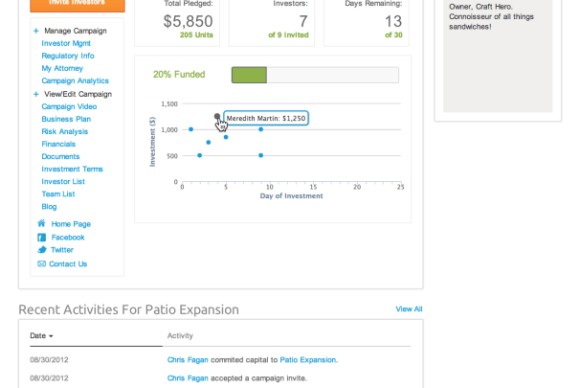
Bolstr’s take on crowd-sourced fundraising is that most businesses don’t want to surrender control by giving up ownership interest. Their alternative: revenue sharing. In exchange for capital, a business agrees to give investors a share of revenue for a fixed period of time. This private-offering approach is a good fit for community-based lending—in other words, raising money from friends, family members and patrons. The site also provides tools for engaging and informing these investors.
PaySimple adds social media links, dynamic invoicing
PaySimple, a cloud-based service that automates billing, receiving payments, and customer management for small businesses, now enables its merchant customers to add incentives for early payments and to charge late fees on invoices. Additionally, companies can add their social media links to online invoices. PaySimple has a two-tiered price structure: for $35 a month, it will handle all your billing and accept major credit card and e-check payments at competitive rates. An $11-a-month plan covers electronic invoicing only.
FinanceIt lets businesses extend point-of-sale credit

CommunityLend, a Canadian firm, has developed a platform that allows businesses to make loans to customers at the point of sale–basically, allowing the customer to pay over time with interest. Called FinanceIt, the service lets the customer apply online and get approval within a minute or two. The service itself is free; interest rates on the loan run between 7 and 13 percent, according to the FinanceIt site. The service so far is primarily working with verticals, such as home repair.
Billhighway tailors financial management apps to nonprofits
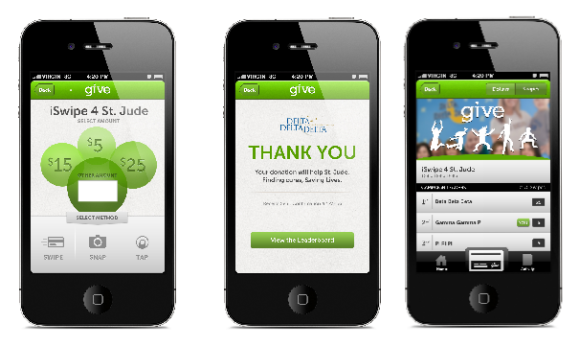
Nonprofits have special financial needs—most notably the ability to accept and properly process donations—that conventional accounting software and services don’t always address in a comprehensive manner. Billhighway offers charitable organizations, churches, schools and the like a full range of cloud-based financial management services, including a soon-to-be-launched mobile donation app. Pricing is customized to the organization’s needs.
A new integration from ShopKeep POS may keep the counter-clutter down at some retailers. This week, ShopKeep integrated the Dwolla and LevelUp mobile payments options into its iPad POS system – another sign that mobile payments are growing in popularity for small businesses as well as shoppers.
There are more than 3,000 merchants using the ShopKeep system; soon their shoppers using Dwolla and LevelUp will be able to check-out with them as well. Dwolla or LevelUp shoppers ready to check out simple use their mobile device at a retailer operating the iPad system from ShopKeep to complete the purchase.
“We are consistently looking to align ourselves with agile companies in the mobile payments space to make the process of doing business more efficient for store operators,” said Jason Richelson, CEO and Founder of ShopKeep POS. “Earlier this year, we were chosen as the first east coast partner to power PayPal’s mobile payments, and now we’ve teamed up with Dwolla and LevelUp to add even more options for our merchants and their customers.”
“Dwolla is saving owners tens of thousands of dollars every day in traditional card fees, so integrations like these demonstrate the dedication ShopKeep has to bringing meaningful solutions to small business owners,” Ben Milne, CEO and Founder of Dwolla. “Dwolla was designed to play nicely with cloud-based solutions, but what ShopKeep has done at the checkout goes beyond the plug-and-play solutions we provide. They’ve created a downright simple, valuable and compelling experience for the end user.”
The ShopKeep system not only rings customer transactions, it automates many store processes – credit card and mobile transactions, receipt and remote order printing and sales management.
Tablet computers are heavily marketed to consumers, with an emphasis on movies, games and personal productivity. But the iPad and devices like it are also changing how companies in the Tucson region go about their daily business.
The iPad debuted in April 2010, but the last year or so has seen massive business adoption for the device. Apple announced in the fall that more than 90 percent of Fortune 500 companies have at least begun experimenting with using iPads. Many even have developed their own proprietary, custom-made apps that are used for specialized business processes.
But it’s not just mega companies that are deploying tablets. The iPad’s simplicity and relatively low price — a basic model costs $499 — have allowed small and medium businesses to capitalize on the trend as well.
A study conducted by New York-based market research firm NPD Group found that nearly three quarters of U.S. businesses with fewer than 1,000 employees have plans to purchase tablets this year.
The iPad isn’t the only tablet computer, of course. There are alternatives, including the Kindle Fire by Amazon and several devices that run Google’s Android operating system. And software giant Microsoft recently announced its own line of tablet PCs that will be known as Surface. But the iPad, which accounts for more than 60 percent of the global tablet market, was the most considered tablet for small businesses in NPD’s study.
Tucson businesses are using the iPad to cut costs, simplify complex tasks and improve customer service. Here is how five Tucson businesses are using the device.
A cooler cash register
Sparkroot Coffee Bar + Fare
245 E. Congress St.
Sparkroot owner Ari Shapiro doesn’t consider himself an early adopter, in fact, quite the opposite.
“I’m actually a bit of a luddite. If I could use an old-fashioned cash register, I would,” he said.
But when the entrepreneur decided to open Sparkroot, a downtown artisan coffee bar, he found himself opting for a completely tablet-based point of sale system over a traditional cash register.
“I’m always one for choosing simplicity,” Shapiro said. “I was intrigued.”
The setup is simple. Using an app called ShopKeep POS, baristas punch in orders on an iPad. Customers either pay in cash or scan their debit or credit card through a scanner that is plugged into the iPad.
ShopKeep also tracks data such as sales and inventory which Shapiro can then review from anywhere.
The iPad has been causing a major disruption when it comes to point of sale, which traditionally has been cumbersome and expensive, often requiring long-term contracts and sophisticated equipment.
Traditional point-of-sale systems can run into the tens of thousands. But the initial set-up at Sparkroot cost about $1,000, including the device and software.
After that, the coffee bar’s ShopKeep POS subscription costs roughly $50 per month.
The iPad is also easier to train employees to use, Shapiro said. The touch screens are easy to navigate and the staff is comfortable with the technology. The iPad also fits with Sparkroot’s hip look and feel.
“It’s easy to use and it’s fun,” he said. “And I wanted something sleek, to go with the environment.”
Paperless planes
Sonoran Wings Flight Training Centre
6720 S. Plumer Ave.
Using an iPad behind the wheel of a car will likely cause an accident, but they’re becoming indispensable in a cockpit.
Jerry Williams, owner of Sonoran Wings Flight Training Centre, is an enthusiastic convert to tablet computing. Students at his school use the iPad for help in everything from dispatching to flight planning to navigation.
“This thing is taking over aviation,” Williams says.
From puddle jumpers to jumbo jets, the iPad is being used to tackle one of the biggest nuisances in the skies: paper.
For years, federal regulations have required pilots to carry heavy flight bags containing aeronautical and navigation charts, airport directories, flight plans and more. The weight adds up, especially in smaller airplanes, Williams said. The Federal Aviation Administration also updates some flight materials nearly weekly, which means keeping paperwork current can also be cumbersome.
But using simple e-reading apps, such as iBooks, pilots can cut down on paper and actually have quicker access to important information swiping a screen than flipping through a heavy chart.
The U.S. Air Force ordered some 18,000 iPads for pilots. Several major airlines, including United and American, also are planning to start using “paperless cockpits.”
Williams said that some of his students use flight-based apps such as ForeFlight, which uses the iPad’s GPS, to help write flight plans and analyze their piloting skills.
The iPad also is handy for looking up weather, which is always on a pilot’s mind, Williams says.
Williams has been working with computers since 1956 and still has the Apple II he bought in 1979.
“Computers are a way of life for me,” he says, “But this is one of the biggest changes I’ve seen since I started using them.”
A tech friendly community
La Posada
350 E. Morningside Road, Green Valley
La Posada, a 700-resident retirement community where the average resident is about 85 years old, is out to end any notion that seniors and technology don’t mix. The nonprofit is dedicated to making its campus tech-friendly.
The iPad is central to those efforts, said Paul Ide, a senior vice president at La Posada.
The community loans iPads from its library and has encouraged informal iPad clubs for residents to share what they’re doing with their devices.
“We try to help the residents use technology to do things they enjoy,” Ide said. “If we can do that, we’re way ahead.”
Ide said the iPad is a good fit for a number of reasons. For one thing, it’s more comfortable to use. Residents don’t have to sit at a computer desk and can move easily with it from room to room. It’s also not susceptible to viruses the way PCs are, making it easier to maintain.
La Posada has also equipped some of its meeting rooms with Apple TVs, which allow residents to broadcast what’s on their iPad to a group. Residents meet regularly to share photos, interesting stories, or simply get more familiar with the device.
“The philosophy is residents helping residents,” Ide said.
When it comes to computing, there is plenty of that. La Posada has a tech helpline staffed by volunteers that offers assistance with frequently asked questions.
The iPad has also been used in Hospice and Memory care, sometimes to play a patient’s favorite music or for video chatting with relatives.
International meetings
Planetary Science Institute
1700 E. Fort Lowell Road
The Planetary Science Institute might have its eyes on the stars, but it also has to keep track of its staff here on earth.
The nonprofit research institute focuses on the exploration of the solar system and works with NASA as well other space agencies. It has about 100 employees, with roughly one-third based at its Tucson headquarters. Others are distributed across 18 states and Washington, D.C., and in countries such as the United Kingdom, Switzerland, Russia, Australia and others.
And many of those people spend ample amounts of time on the road, traveling to conferences and meetings. In short, building a team atmosphere can be tough said director Mark Sykes.
The institute started out using iPads to do basic work on the road, like email. But when the iPad 2 came out, and was equipped with a Web camera, Sykes had the institute trade in for the brand new version. Every employee now has an iPad 2.
The institute also built a custom iPad app called PSI Connect. It contains a directory of every employee and shortcuts to connect with them via video apps such as FaceTime or Skype.
“The value of iPads in our business is communication,” Sykes said.
The ability to have live video has been a major upgrade to the institute’s weekly staff meetings. The iPads also helped the institute get around having to buy a pricey video conferencing tool, with a special telephone line and camera.
“We’ve gotten people used to seeing each other. We know what we look like. We talk with each other,” Sykes said. “It builds and helps to maintain our community.”
Remote business management
Z Mansion
288 N. Church Ave.
Tom Hill runs a true home-based business. Z Mansion, the historic downtown wedding and event venue Hill owns, doubles as his family’s actual house. The trouble is, Hill is seldom home.
After a successful career as a writer, then as a Web entrepreneur, Hill splits his time between Tucson and France, and travels around the globe doing a mix of exploring and volunteering.
The iPad lets Hill manage the business of Z Mansion from just about anywhere. The dozen or so vendors Z Mansion works with handle most of the nitty gritty of event planning, but Hill uses Apple’s Web-based iCloud to update and review slideshows, spreadsheets, and the company’s books from the road.
The company keeps everything, from planning worksheets to rehearsal instructions in the cloud where they can be easily updated and accessed from any of the company’s devices.
“It’s really easy to use and update,” Hill said. “And it lets us continue to be involved in a company that we like. It’s fun for us to do this.”
Hill also uses an app called HelloFax to send and receive faxes and electronic signatures. And for staff meetings, he uses the iPad’s camera.
Z Mansion vendors also use iPads to give walking tours to prospective customers using KeyNote, a slideshow app for Mac products. You couldn’t do that with a laptop, Hill said.
“It’s interactive, good-looking and mobile,” he said.
They also can show the house to anyone who might not be able to tour in person using the built-in webcam. For example, one half of a prospective couple toured the venue from a base in Afghanistan.
According to data from Baynote and Shop.org, personalization can drive more retail conversions. Using personalized recommendations retailers saw a 355% conversion increase. Other interesting findings included:
• 35% apparel orders influenced by recommendations
• 16% of apparel sites’ total revenue results from clicking recommendations
• 38% of apparel sites’ revenue results from recommendations
In addition to optimizing on-site search options, they suggest adding on-site recommendations.
Meanwhile ShopKeep POS has released an iPhone app which helps merchants by making real-time sales viewable through a mobile device. The app tracks previous day sales and metrics so that merchants can know in real time what products are selling, inventory rates and how to engage with consumers in-store.
“Each and every platform update we offer is directly tied to customer feedback,”said Jason Richelson, CEO and Founder ofShopKeep POS. “Keeping consistently up-to-date on store sales is critical to understanding business successes and disappointments. ShopKeep POS is the only iPad POS system that offers merchants the ability to manage their store from an iPhone or Android phone.”
Ike Escava, co-owner of The Bean, a popular three-store coffee shop chain in the East Village in NYC. “I love it!” Escava said. “ShopKeep POS keeps raising the bar for point-of-sale reporting. I can now see real time metrics on all three of my stores in one app with one click.”
Through the app merchants can monitor both sales and returns, see gross margins to track earnings each day and see multiple store locations via a single screen to track how stores are doing in different neighborhoods, cities or regions.
Business Rockstars Interview – Jason Richelson
Business Rockstars
Traditional cash registers may soon be a thing of the past.
Two Beloit small businesses have already dumped the concept of a clunky cash register. The Cheese People and Bushel & Peck’s Local Market instead opt for an iPad point-of-sale (POS) solution from ShopKeep POS.
ShopKeep is an iPad POS system that gives merchants the power to run and analyze their businesses on a cloud-based interface. By combining an iPad POS system with detailed BackOffice reporting, merchants have the ability to generate analysis of inventory, sales and customer relationship management, according to www.shopkeep.com.
Thousands of merchants nationwide already have switched to ShopKeep POS as their iPad POS, according to the website. The merchant network includes quick serve restaurants, retail, locations, specialty food, services and more, said Kym Lino with Atomic public relations.
ShopKeep projects tablet POS systems will dominate the market in three to five years, Lino said.
Cheese People owner Darren Larsen said he purchased the iPad POS system ShopKeep with accompanying printer, cash box and scanner, to use instead of a traditional cash register system when he opened his business. He said a subscription to the service and the purchase of the iPad is about half the price of using a traditional system. An attachment allows a credit card to be swiped through as well.
Employee Andrew Montrone said she was a little nervous about dealing with new technology, but was forced to do it and now loves it.
Larsen said using an iPad is ideal for small businesses because of cost and counter space savings. Because ShopKeep POS is connected to the Internet, Larsen said he can track inventory or sales when he is outside the business.
Nikki’s Cafe, located in the same space as The Cheese People, on 604 Pleasant St., hasn’t switched to an iPad for a cash register yet, but uses an iPad to run owner Lloyd Smith’s Rewards Program for customers. In the past, Smith used a traditional punch card, allowing customers to get a free cup of coffee after a certain amount of purchases. However, many people lost the cards and Smith didn’t like throwing away so much paper.
Customers are now given a plastic card they can use, similar to a credit card. And if they forget it they can log on the iPad via their email address. The subscription program called “Belly” also tracks rewards points. After a certain amount of purchases, people can be eligible for a free pastry, smoothie or other goodies. After 500 points, people will be able to get the opportunity to meet Smith’s cat, Nikki.
Smith said customers love the Rewards Program. He would consider using an iPad for a POS system in the future if a compatible program becomes available.
Who better to design a point-of-sale (POS) system for small businesses than a small-business owner frustrated with his POS technology options?
That’s the back story for ShopKeep, a cloud-based POS solution from the SMB market that uses the Apple iPad as its point of entry. The company’s founder and CEO, Jason Richelson, originally designed the system to run his $7 million Brooklyn-based wine and food store, The Green Grape after he couldn’t find one that would run the sorts of reports he needed. The system he designed, ShopKeep POS, is now used by more than 2,000 small retailers, Richelson said.
The simplicity of the ShopKeep POS solution along with its promise of 24×7 customer support is helping track retailers from dress boutiques to coffee shops to chocolatiers, he said.
The solution offers basic cash register and inventory functions and can be bought online for prices starting at $49 per month per register. (You can try it for free for up to 30 days.) While ShopKeep POS isn’t relegating its outreach to any particular vertical market, it is adding features specific to restaurants, such as the ability to print orders from an iPad directly to the kitchen, Richelson said.
A deal with PayPal enables ShopKeep POS users to handle cashless mobile payments for a flat rate of 2.7 percent on those transactions.
ShopKeep is one in a growing array of POS options that center on tablet computers in general and the Apple iPad in particular. The company is backed by $3 million in venture capital, including $2.2 million in Series A funding it raised earlier this year.
“Tablets are going to replace cash registers and POS systems in the next three to five years,” Richelson said. Here’s more on what he thinks. Of course, he is biased, but ShopKeep POS is far from the only iPad-based POS system aimed at SMBs.
Other companies that also deserve the small-business owner’s attention include Revel Systems, which just debuted a solution targeted at food trucks ; Square, with its iPad-specific Square Register solution; and LightSpeed, which has extended its systems for Macintosh computers over to the iPad platform.
The way retailers handle purchases is changing rapidly because of electronic payments, New York-based ShopKeep is betting it can help push this evolution even further. The so-called point of sale is no longer limited to traditional cash registers built around PC-based hardware and software. Companies such as startup Own Point of Sale in San Francisco and point-of-sale giant NCR offer software to process sales transactions on tablet devices.
The idea seems to be getting more traction in the industry as retailers replace their old registers with iPads to process sales. ShopKeep wants to position its technology to make retailers lives easier at lower costs. Many retailers today use point-of-sale platforms based on the old-school Windows XP operating system that’s specially configured to have touch screen monitors, says Jason Richelson, CEO and co-founder of three-and-a-half-year-old ShopKeep, Such units can cost about $3,000 each by his estimates. He believes drastic changes lie ahead in terms of the technology that retailers want. “A huge upheaval is going to happen over the next three years in the point-of-sale space,” he says.
Given the costs of traditional systems, Richelson sees a place for his company to offer retailers a less expensive option on comparatively lower priced tablets. The ShopKeep platform is used by small and midsize retailers, he says, as well as larger companies.
Investors including Tribeca Venture Partners, TTV Capital, and Contour Venture Partners are backing ShopKeep’s plans to disrupt the POS scene.. In January, ShopKeep announced it raised $2.2 million in a Series A round.
Richelson says his company is generating its own revenue and expects to be break even on cash flow within the next year. “We’re getting close to paying our bills” he says.
ShopKeep offers two main types of software. The management platform runs in the cloud and is accessible through the Apple iPad, Google Android-based tablets, and other Web-enabled devices. Retailers can use this software to oversee inventory and other store-related data via the Web.
The technology gets a bit more specialized when it comes to handling sales transactions. Small businesses—many have just one or two stores—that sign up with ShopKeep must use an iPad app if they want to conduct transactions with the platform. The iPad can be mounted on a counter much like a traditional register. ShopKeep sells iPads packaged with additional equipment such credit card readers to charge consumers. Richelson says ShopKeep largely supports the iPad because of the device’s widespread adoption among small businesses.
A Java version of ShopKeep’s sales software exists for Android tablets but he says that platform is only available for larger, enterprise customers.
Richelson is not alone seeing tablets as a potential future for point of sale systems. Square in San Francisco for example makes a credit card reader that functions with Apple iOS and Android devices. Square also offers an iPad app for processing sales.
Embracing new types of electronic payments is part of ShopKeep’s long-term strategy. At select coffee shops, ShopKeep’s software is set up to accept payments from customers who want to use their PayPal accounts. The platform may expand to include electronic payments from such services as Dwolla and LevelUp, Richelson says.
ShopKeep’s roots extend to a wine store he opened in 2004 called The Greene Grape in the Fort Greene section of Brooklyn. Some of the challenges he faced as a retailer inspired the creation of ShopKeep. “I was having trouble with [computer] servers in several of my stores where they kept crashing,” Richelson says. Fixing those databases himself became a hassle. He also wanted a way to monitor his stores’ sales from his home office. “I could not easily see what was going on each store,” he says. “That’s not the way things work in today’s world.”
Back in 2008, he looked for cloud-based point-of-sale systems to resolve his dilemma, but he did not find anything that fit his needs. That inspired the development of ShopKeep. Early funding for ShopKeep came from the stores. Richelson has since handed over the reins for The Greene Grape stores to a partner.
ShopKeep has a staff of 30 and plans to add up to 15 more hires, thanks in part to its latest funding. The company also moved into a 4,300-square-foot office on Broad Street at the end of June compared with the 2,100 square feet of space it previously occupied within the same building. Richelson says he plans to stay in the space at least one year while hiring more staff. He expects his company to continue growing as retailers adopt new technology. “Tablets will be replacing those [point of sale systems] over the next three to five years,” he says.